Florida travel
Sea Turtle Nesting Season Is Here: Here's How South Florida Can Help
It's peak sea turtle nesting season in South Florida. Here's why darkness matters for nesting mothers and hatchlings, and what to do (and not do) if you encounter one on the beach.

It’s peak sea turtle nesting season in South Florida, and up and down our coastline, mother turtles are hauling themselves onto the sand at night to dig nests and lay their eggs. A few weeks later, tiny hatchlings make their own perilous crawl back to the sea. It’s one of the most remarkable natural events happening right in our backyard, and one that depends heavily on how well beachfront communities protect the dark.
Why Darkness Matters So Much
Female sea turtles need a dark, quiet beach to feel safe enough to nest. Bright white or blue-toned lighting from hotels, condos, restaurants, and streetlights can scare a female away before she ever nests, forcing her to return to the ocean without laying her eggs - a “false crawl.”
The bigger danger, though, is for hatchlings. Newly emerged babies instinctively crawl toward the brightest horizon, which for millions of years was reliably the moon and starlight reflecting off the ocean. Artificial lighting overrides that instinct and draws hatchlings inland toward roads, parking lots, and pool decks instead of the water, where they can die from dehydration, predation, or traffic.
Pompano Beach, pictured above, is a great example of doing this right. Instead of harsh white lighting, the beachfront corridor uses warm amber and orange fixtures. Sea turtles are far less sensitive to these longer wavelengths, so the area stays walkable and inviting for people while staying dark and safe for turtles.
What beachfront properties and visitors can do:
Switch outdoor bulbs to turtle-friendly amber, red, or long-wavelength LED lighting during nesting season (roughly March through October in Florida). Close curtains or blinds after dark if you’re staying in a beachfront room. Turn off unnecessary outdoor and balcony lights facing the beach. Avoid flashlights and phone lights on the sand at night - even a quick photo flash can disorient a nesting turtle or a hatchling.
If You See a Nesting Turtle
Encountering a loggerhead, green, or leatherback turtle nesting is unforgettable, but it’s also a sensitive moment that can be easily disrupted.
Do: stay quiet, keep your distance (experts recommend at least 30-50 feet), and stay low and still. Turn off flashlights and phone screens; if you must see, use a red-filtered light and only briefly. Let her finish nesting and return to the water on her own before you move around. Report the sighting to local marine conservation groups or Florida Fish and Wildlife if a nest needs marking.
Don’t: use flash photography or shine any white light on her. Don’t touch her, get in front of her, or block her path back to the ocean. Don’t dig around the nest or attempt to touch the eggs. Don’t leave beach furniture, holes, or trash on the sand - these can trap or injure turtles.
About the Hatchlings
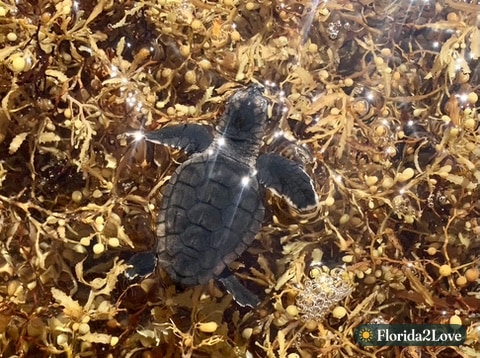
Roughly 45 to 70 days after eggs are laid, dozens of hatchlings emerge from the nest together, usually at night, and scramble toward the water. Once they reach the surf, many hatchlings seek out drifting mats of sargassum seaweed, like the one pictured above. These floating rafts offer food and camouflage during the vulnerable first stage of their lives, sometimes called “the lost years.”
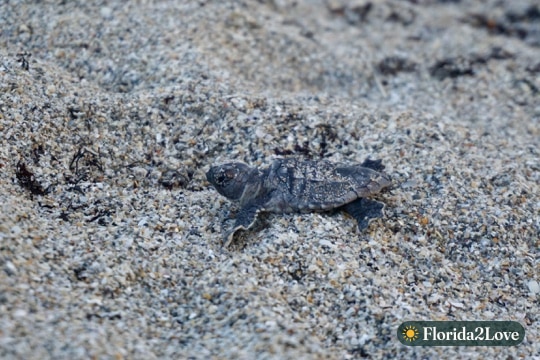
If you find a hatchling on the beach:
Do not pick it up or carry it to the water. Let it crawl on its own - that crawl helps it imprint on the beach for when it returns to nest as an adult, and it activates muscles it needs for swimming. Keep pets, foot traffic, and bright lights away from its path. If a hatchling seems disoriented, stuck, or is crawling toward a road or light instead of the ocean, contact a local wildlife rescue or FWC hotline rather than intervening yourself. Fill in any holes or knock down sandcastles before leaving the beach - hatchlings can get trapped in them on the way to the water.
South Florida’s Nesting Beaches
Florida hosts more sea turtle nests than anywhere else in the country, and Broward and Palm Beach counties are consistently among the busiest stretches for loggerheads, with green sea turtles and occasional leatherbacks nesting here too. That makes it a shared responsibility: every dark balcony, amber streetlight, and quiet, unobstructed stretch of sand gives hatchlings a better shot at making it to the water.
Peak season is happening right now. A few small habits - lights down, curtains closed, distance kept - go a long way toward keeping South Florida’s turtles coming back for generations to come.