Florida travel
King Tides in South Florida: Dates Through 2027 and How to Protect Your Property
A guide to South Florida's king tides: what causes them, the highest-tide windows through the end of 2027, and practical steps homeowners can take to protect their property.
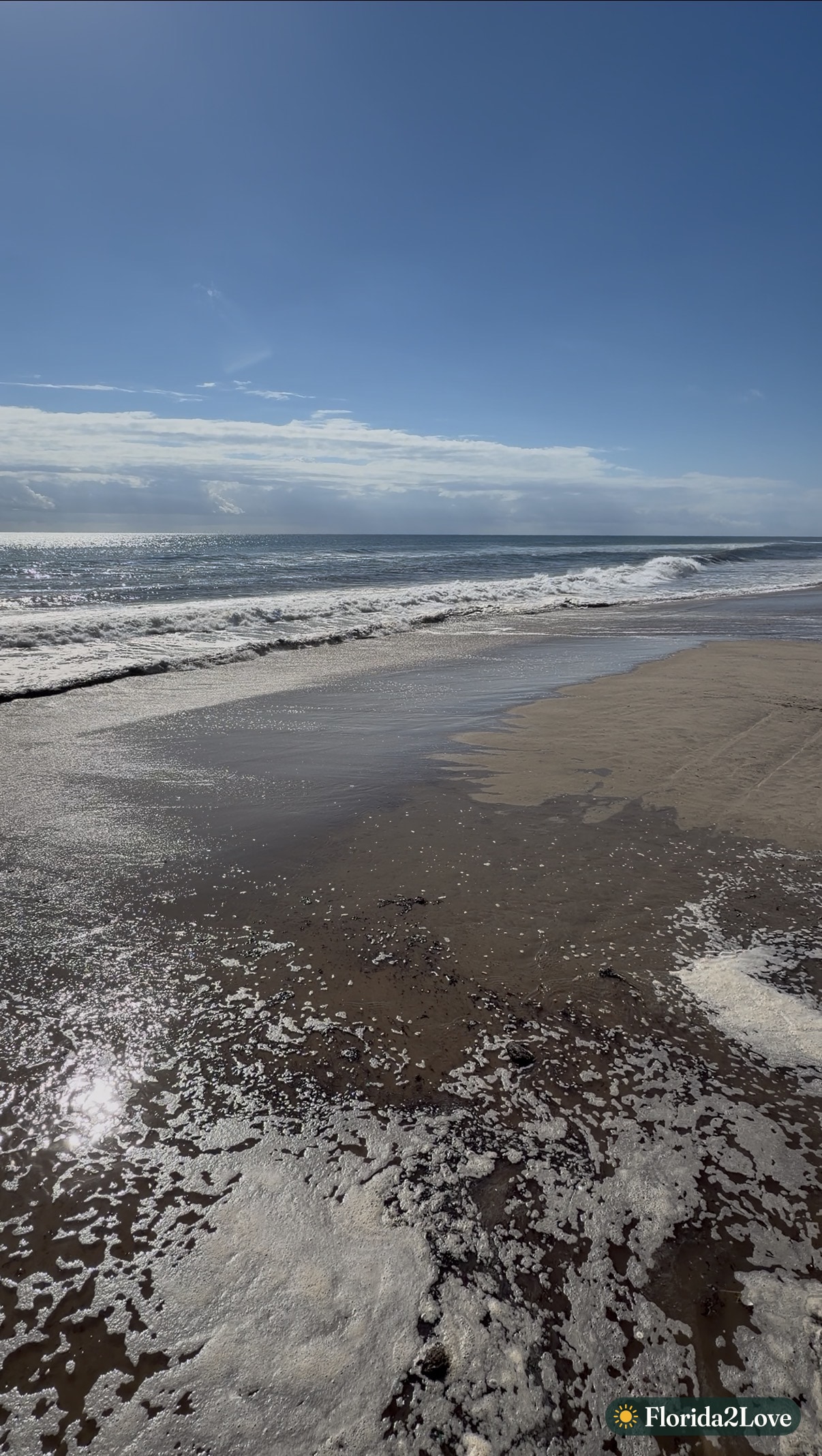
The photo above was taken at Boca Raton South Pavilion, and it says more than any forecast could: the waves pushed almost all the way across the beach, leaving only a narrow strip of dry sand. That is a king tide at work, and if you live anywhere near South Florida’s coast, it is worth understanding when they happen and what they mean for your property.
What Is a King Tide
A king tide is not a storm. It is the highest predictable tide of the year, caused by the ordinary pull of gravity lining up in an unusually strong way. It happens when the sun and moon are aligned during a new or full moon (a “spring tide”) at the same time the moon is at or near its closest point to Earth in its orbit (called perigee). That combination pulls the ocean higher than normal high tides, sometimes by a foot or more.
In South Florida, king tides are made worse by low, flat elevation and a porous limestone base that lets seawater rise up through storm drains and even through the ground itself, not just over seawalls. That is why streets in Miami Beach, Fort Lauderdale, and other coastal communities can flood on a clear, sunny day with no rain in sight, a phenomenon locals call “sunny day flooding.”
King Tide Dates Through the End of 2026
These windows are drawn from the South Florida Water Management District’s 2026 king tide forecast and NOAA tide predictions for the region’s east coast:
- September 24 to October 15, 2026 (new and full moon alignment)
- October 22 to November 12, 2026 (full and new moon alignment, including the season’s highest predicted peak around October 27)
- November 22 to 29, 2026 (full moon)
- December 22 to 27, 2026 (full moon)
During these windows, high tides can approach or exceed local flood thresholds in low-lying parts of Miami-Dade, Broward, and Palm Beach counties, especially when a strong onshore wind pushes water higher still, as it appears to have done in the Boca Raton photo above.
Looking Ahead to 2027
South Florida agencies typically do not publish an official king tide calendar for the following year until partway through the current one, so a full 2027 forecast is not out yet. What is available now is NOAA’s own predicted tide data for the region, which is calculated years in advance from the same lunar and solar cycles and is not affected by weather. Based on those predictions, the highest tides of 2027 are expected to cluster around:
- Late August to early September 2027 (roughly August 30 to September 2)
- Late September to mid-October 2027 (roughly September 27 to October 2, with a secondary peak around October 15 to 16)
- Mid to late November 2027 (roughly November 13 to 16, and again November 25 to 28)
- Mid-December 2027 (roughly December 14 to 15)
Treat these as the general windows to watch, not exact dates. Check the South Florida Water Management District’s seasonal forecast or NOAA’s tide predictions for your nearest station closer to each date, since local agencies refine these numbers as the season approaches.
How to Protect Your Property
You do not have to wait for a named storm to prepare for coastal flooding. A few practical steps go a long way during king tide season:
Before the season:
- Clear storm drains and gutters near your property so water has somewhere to go.
- Check that your yard grades away from your home’s foundation, not toward it.
- Install a backflow preventer or check valve on sewer and drain lines if you do not already have one. This stops rising water from pushing back up through your plumbing.
- Consider flood insurance even if you are outside a mapped high-risk zone. Standard homeowners insurance does not cover flood damage, and South Florida’s flood zones are expanding as sea levels rise.
- Elevate outdoor electrical outlets, HVAC units, and pool equipment where possible.
During a king tide window:
- Move vehicles to higher ground if your street has a history of flooding.
- Keep sandbags or water-diversion barriers on hand for doorways and garage entries.
- Avoid driving or walking through standing saltwater. It can hide dips, open drains, and it corrodes vehicles and outdoor equipment quickly.
- Bring in or secure outdoor furniture and anything that could float away or become debris.
- Check on elderly or mobility-limited neighbors, especially if flooding affects sidewalks or building entrances.
Longer term:
- Ask your city or county about living shoreline projects, seawall height requirements, and stormwater upgrades in your area. Many South Florida municipalities have active resilience plans worth knowing about.
- Photograph flooding on your property when it happens. Documentation helps with insurance claims and gives local governments real data on where upgrades are needed most.
Why It Matters Beyond the Season
King tides are a preview of where daily high tide is heading as sea levels rise. What floods a street for a few hours today during a king tide window can become a regular occurrence within years. Paying attention now, and adjusting drainage, elevation, and insurance accordingly, is one of the most useful things a South Florida property owner can do.
The next time you see waves reaching further up the sand than usual, like at Boca Raton South Pavilion, it is worth taking a closer look at the calendar. It is not a storm passing through. It is South Florida’s coastline showing you, a little further in advance than most warnings, exactly what to plan for.