Florida travel
Beautyberry: One of Florida's Biggest Garden Show-Offs
Meet Callicarpa americana, Florida's native Beautyberry: its bright purple fall berries, the wildlife that feeds on them, and a few fun facts about this easygoing native shrub.
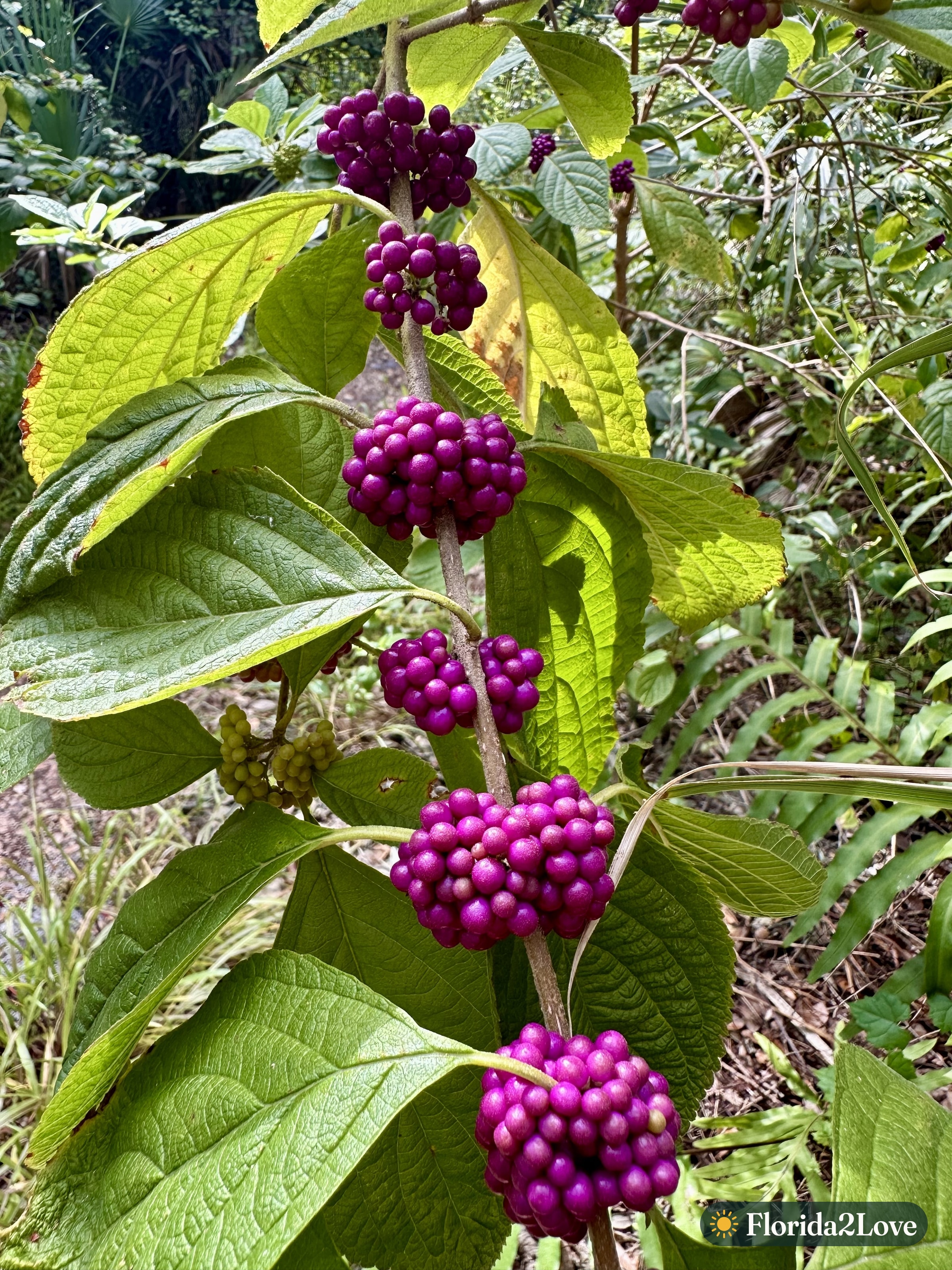
Walk through a Florida hammock or along a nursery path in early fall and one plant is impossible to miss. Clusters of electric purple berries wrap tightly around bare stems, glowing against the green like something out of a fantasy novel. Meet Beautyberry (Callicarpa americana), a Florida native that knows exactly how to make an entrance.
A Native with Personality
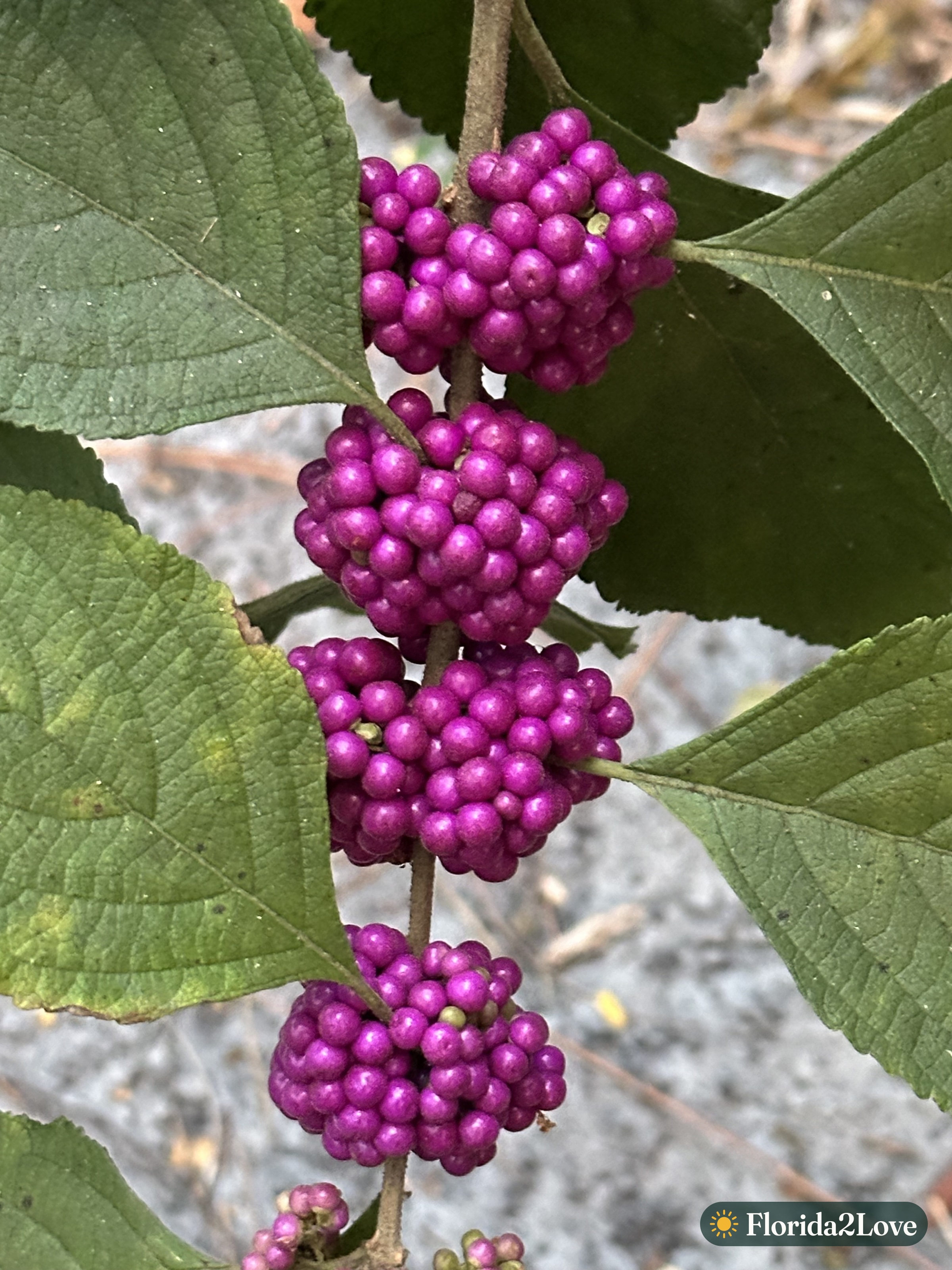
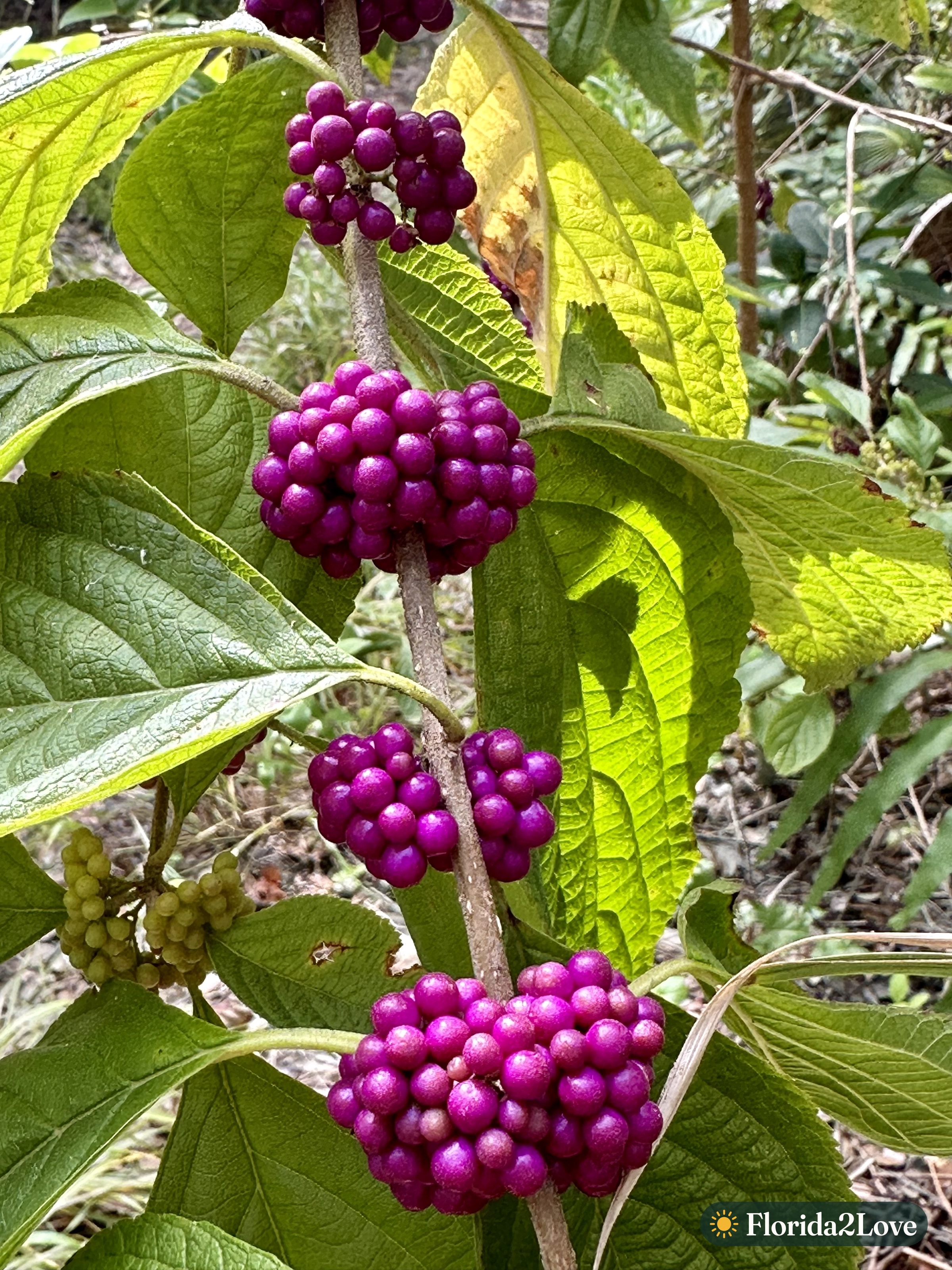
Beautyberry is a deciduous shrub native to the southeastern United States, and it thrives across Florida in sun or partial shade. It grows in loose, arching clumps, usually three to six feet tall, with soft green leaves that turn yellow before dropping in late fall. Small pink or lavender flowers appear in summer, tucked along the stems, but they are just the opening act. By September and October, those flowers give way to the plant’s real showstopper: tight, beaded clusters of berries in a shade of purple so bright it almost looks unnatural.
Not Just Showing Off
Those berries are not just for looks. They are an important late-season food source for Florida wildlife, especially as other food becomes scarce heading into winter.
Animals that eat Beautyberry:
- Mockingbirds, cardinals, robins, and other songbirds strip the berries clean, often in a single visit.
- Bobwhite quail and wild turkey feed on the fruit and use the shrub for cover.
- Raccoons, opossums, foxes, and white-tailed deer browse both the berries and the foliage.
- Armadillos have been known to forage fallen berries from the ground beneath the shrub.
Planting Beautyberry is one of the easiest ways to turn a yard into a genuine wildlife stop, not just a decoration.
Fun Facts
- The genus name Callicarpa comes from Greek for “beautiful fruit,” which is about as accurate as a plant name gets.
- Crushed Beautyberry leaves have long been used in folk remedies as a natural mosquito repellent, and researchers have since confirmed the leaves contain compounds that do repel insects.
- The berries are technically edible for people too. They are tart and mild, and some Southern cooks turn them into jelly, though they are far more popular with birds than with humans.
- Beautyberry is remarkably low-maintenance. It tolerates poor soil, needs little water once established, and can be cut back hard each winter, since it flowers and fruits on new growth.
Growing It Yourself
Beautyberry is as easy to grow as it is to admire. It handles Florida’s heat and humidity without complaint, tolerates both sun and shade, and asks for almost nothing beyond well-drained soil. For anyone looking to add color, movement, and real wildlife value to a Florida landscape, this is about as low-effort and high-reward as native plants get.
Come see Beautyberry and other Florida native and Florida-friendly plants at the nursery, and find out what you can add to your own garden this September.